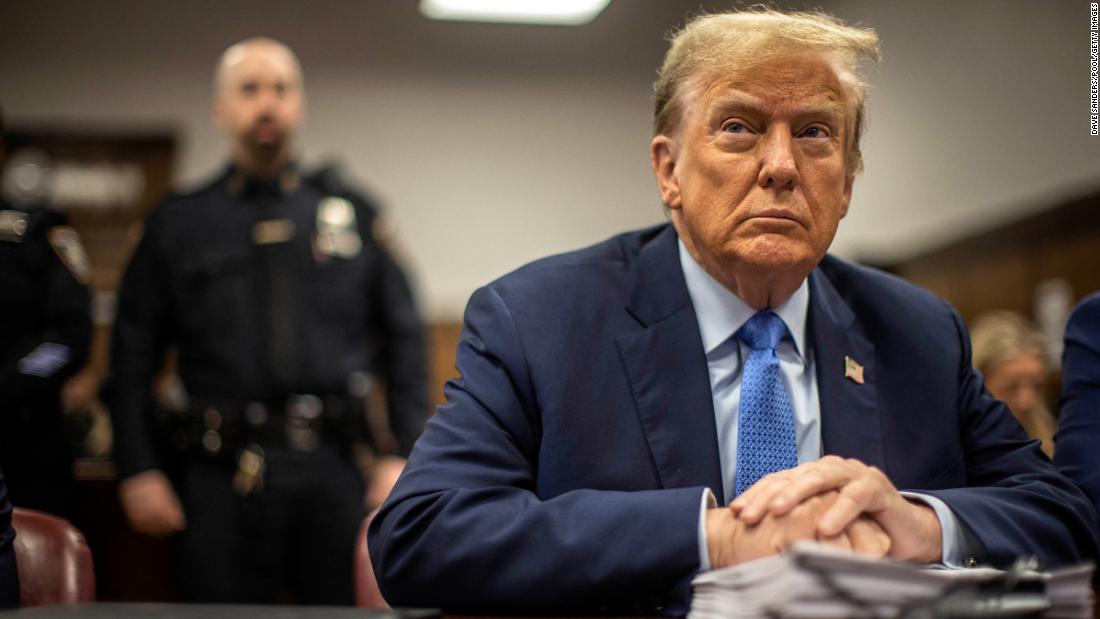
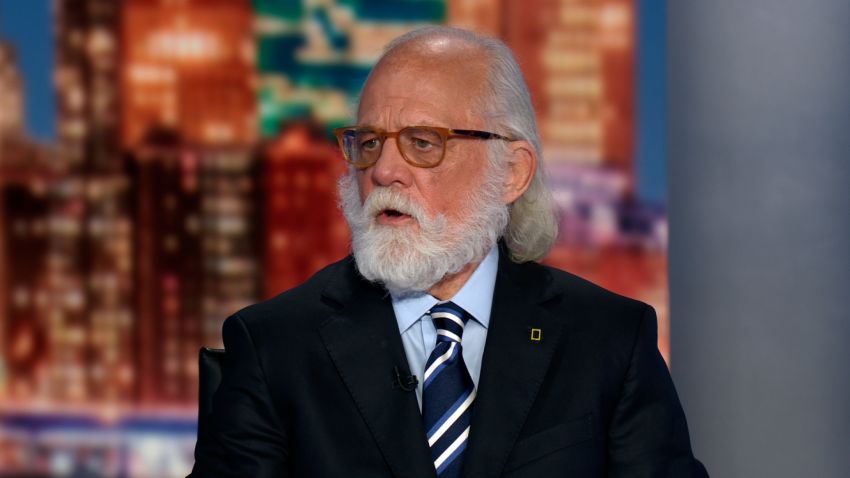
In its cross-examination of Donald Trump’s long-time assistant, the defense is looking for another opportunity to humanize the former president, according to CNN anchor and chief legal analyst Laura Coates.
Rhona Graff testified that she worked for Trump for 34 years at the Trump Organization, sitting outside his office on the 26th floor of Trump Tower.
“This is not a time to, as a cross-examiner, to attack her as if she is out to get Donald Trump. You’re going to see a softer touch for this particular witness,” Coates said.
That’s compared to the cross-examination of the last witness, former tabloid publisher David Pecker, who testified about the National Enquirer’s efforts to suppress negative stories that could have harmed Trump's 2016 campaign.
Still, the defense ended the questioning of Pecker with a question also aimed at humanizing the former president. Defense attorney Emil Bove asked Pecker if he believed Trump cares about his family. He replied, “Of course I do.”
Graff is another opportunity for the defense to continue to tell that story about Trump to the jury, Coates said.
“You hear a lot about the myth of Donald Trump and of course, all the bravado, what you think might happen in Trump Tower. Her role is to demystify all of that and portray him as somebody who is approachable,” Coates said.
Since January, Dr. Stacy Seyb, a maternal-fetal medicine specialist in Boise, Idaho, has had at least four of his patients wheeled onto emergency flights and airlifted out of the state while experiencing severe pregnancy complications.
One of them was a woman whose water broke around 20 weeks into her pregnancy, putting her at risk of infection. In these types of emergencies, ending the patient’s pregnancy can be part of the standard of care. But doctors at the hospital where Seyb works say they have been forced to transfer patients who have these complications out of state to comply with the state’s abortion ban.
“This has become the new normal, which is sad,” he said.
Idaho bans all abortions, with criminal penalties of up to five years in prison for anyone who performs one or assists. The law includes limited exceptions for rape, incest and to save the life of a mother, but there is no exception to protect her health.
After oral arguments Wednesday, the Supreme Court is now considering whether Idaho’s abortion ban violates a federal law that requires hospitals to offer emergency care to patients in crisis. Thus far, the justices seem split on that question, with some of the more conservative justices appearing to lean toward the state of Idaho, which has argued that federal law should not supersede its own laws on health care.
St. Luke’s Health System, which includes the hospital where Seyb works, filed an amicus brief in the case, noting that an abortion may be critical to protect a patient from nonfatal harms like loss of organs, permanent disability, severe pain or loss of fertility. It also said the ban forces patients to endure potentially risky out-of-state transfers.
Since Jan. 5, when the Supreme Court lifted an injunction that had shielded doctors providing emergency care, six pregnant patients at St. Luke’s have had to be airlifted out of Idaho, according to Dr. Jim Souza, the chief physician executive for St. Luke’s. Last year, the system saw only one such transfer, he said.
In a press conference after Wednesday's arguments, Idaho Attorney General Raúl Labrador, a Republican, questioned accounts of doctors transferring patients. “It’s really hard for me to conceive of a single instance where a woman has to be airlifted out of Idaho to perform an abortion,” he said.
“Our law is very clear,” he said. “It protects doctors, it protects women, it protects unborn children, and it ensures that the doctors can use a subjective standard if they believe that the life of the mother is in jeopardy.”
Out-of-state medical transfers can delay needed care and carry immense financial and emotional costs for pregnant patients, who may wind up far from home during some of the most difficult moments of their lives. The cost of the flights can exceed $10,000, and the transportation may also be considered out-of-network by insurance, increasing the share patients must shoulder themselves.
Life Flight emergency response helicopter in Idaho.Universal Images Group via Getty Images
One of the most common complications is when a patient’s water breaks in the first two trimesters of pregnancy, according to Souza. Last year, the hospital system had 54 such cases, most occurring before fetal viability.
Physicians for Human Rights, an organization that has advocated for abortion rights, also filed an amicus brief in the Supreme Court case. It cites a March report for which the group interviewed several doctors who practice or practiced in Idaho, along with doctors based in neighboring states who received patients who were transferred.
Dr. Sarena Hayer, a physician in Oregon, described receiving a patient from Idaho who was gravely ill when she arrived by air. The patient was 18 weeks pregnant with twins when she suffered a severe pregnancy complication. The patient also had a history of kidney issues and had previously received a transplant.
Doctors at her Idaho hospital determined that one of her fetuses had died and her lab results were troubling. She told her doctors she “wanted them to do whatever they had to, including termination,” according to the report. But she was ultimately airlifted to Oregon. The following morning, she lost her other fetus too.
If the woman had started her care in Oregon, she would have been offered a termination almost immediately, Hayer said.
“What other medical condition can we think of that would require a patient who’s sick to get transported to another state for a legal reason?” Hayer told NBC News. “It just really feels unjust.”
“In a way, you’re torturing the women because you’re not providing the definitive care until you can say they’re at the brink of death,” Dr. Michele Heisler, the medical director for Physicians for Human Rights, said in an interview. “I think that’s the stake here.”
Doctors in Idaho also described situations in which patients with severe pregnancy complications were unable to leave the state to seek treatment.
Dr. Michael Schneider, a maternal-fetal medicine specialist in Boise, recalled a patient whose water broke around 20 weeks but declined to be airlifted out of state, in part because she could not leave her family. Expenses were another concern. The woman left the hospital, he said, then returned once she experienced contractions. She went into labor, but her fetus did not survive.
Over his decades in medicine, Schneider has learned that vulnerabilities for pregnant women are acute. On his first night of a residency at a hospital in Memphis, Tennessee, a patient with sepsis died.
“That’s what keeps me up — that somebody’s going to be placed in harm’s way, or a transport is going to go bad and there’s going to be a significant injury to the mother,” he said. “It doesn’t get any worse than losing two.”
The Supreme Court appeared ready to reject former President Donald Trump’s claims of sweeping immunity and the broad protections he has sought to shut down his federal election subversion case, but also reluctant to give special counsel Jack Smith carte blanche to pursue those charges.
After nearly three hours of oral arguments, several of the justices seemed willing to embrace a result that could jeopardize the ability to hold a trial before the November election.
The court’s conservatives aggressively questioned the lawyer representing the special counsel, seemingly embracing a central theme that had been raised by Trump that without at least some form of immunity future presidents would over time be subjected to politically motivated prosecutions.
Much of the hearing focused on whether there should be a distinction between official acts by Trump pursuant to his presidential duties and his private conduct.
How the court decides the dispute could determine Trump’s legal fate and will likely set the rules of criminal exposure for future presidents.
Here are the key takeaways:
Supreme Court seems unlikely to fully resolve the immunity question
As the justices wrestled with the nuances of the case and a series of complicated hypotheticals, it seemed increasingly unlikely the court would offer a clear answer on whether Trump may be prosecuted for his effort to overturn the 2020 election.
The upshot is that the Supreme Court appeared likely to leave much of that work to lower courts, proceedings that could take months and further delay a trial that had originally been set for March 4.
That outcome would play into Trump’s strategy of delay and jeopardize a trial before the election.
Chief Justice John Roberts at one point criticized the unanimous and scathing ruling against Trump from the US Court of Appeals for the DC Circuit that would have allowed his case to quickly move to a trial. Roberts suggested the appeals court didn’t lay out an adequate reason for why virtually all of Trump’s actions were subject to prosecution.
“As I read it, it says simply a former president can be prosecuted because he’s being prosecuted,” Roberts said skeptically. “Why shouldn’t we either send it back to the court of appeals or issue an opinion making clear that that’s not the law?”
Trump attorney concedes some acts may be ‘private’ and not official
In a notable series of concessions, Trump’s attorney John Sauer acknowledged that some of the alleged conduct supporting the criminal charges against the former president were private.
The admission shows how much ground Sauer gave up during the hearing, after Trump had made more sweeping claims in his legal briefs earlier this year, asserting that the entire prosecution should be thrown out.
Trump himself has continued to lobby for absolute immunity, including before his appearance at a New York court where he’s on trial for business fraud.
Justice Amy Coney Barrett was the first to pin Sauer down on the distinction between official and personal acts alleged in the charges. He tentatively agreed with how, in court filings, the special counsel had labeled particular acts as private – acts that alleged that Trump plotted with his private attorneys and campaign advisers to spread bogus election fraud claims, to file false court filings and to put forward fraudulent sets of electors. As part of the exchange, he conceded those private acts would not be covered by presidential immunity.
In a later back and forth with Justice Elena Kagan, Sauer muddied the waters.
He said that Trump’s phone call with Georgia Secretary of State Brad Raffensperger , in which he requested Raffensperger “find” enough votes to flip the results, was not an official act. But Sauer claimed Trump was acting in an official capacity in his conversation with the Republican National Committee about assembling slates of so-called “fake electors” and his call for the Arizona lawmakers to hold a hearing on election fraud.
Sauer’s willingness to commit to the idea that some allegations in the indictment weren’t protected by immunity was an extraordinary walk back of what had been the former president’s position up to that point.
But the Trump lawyer may be hoping that the move will encourage the justices to order more proceedings on deciding what’s private and what’s public in the indictment, a move that could seriously delay the case’s march to trial.
Justice Barrett brings up issue of ruling scope and timing
Several members of the court’s conservative majority – including Barrett – appeared concerned about the scope of Trump’s claim that he is entitled to “absolute” immunity.
Trump’s attorney, Sauer, faced a series of hostile questions in the early moments of the hearing about that position.
What will likely prove critical – and what was not clear from the arguments – is how the Supreme Court sends the case back to lower courts for more review.
Barrett at one point sketched out how the case could move to trial quickly: Smith could simply focus on Trump’s actions that were private and not official.
“The special counsel has expressed some concern for speed,” Barrett said. She asked DOJ attorney Michael Dreeben if the trial court can sort out what’s official or private acts of the presidency or whether there “another option for the special counsel just to proceed on the private conduct?”
Prosecutors could, hypothetically, draft a slimmed-down superseding indictment that strips out the potentially official acts.
Dreeben told Barrett that the indictment against Trump is substantially about private conduct, meaning that a trial could proceed even if the Supreme Court finds some immunity for Trump’s official actions.
Liberal justices weren’t impressed with Trump’s absolute immunity claims
It was pretty clear where the court’s three liberals will be when the opinion lands.
Justices Sonia Sotomayor, Elena Kagan and Ketanji Brown Jackson spent much of the argument quizzing the attorneys on the potential implications of Trump’s absolute immunity position.
In one of the many hypotheticals the liberals tossed at Trump’s attorney, Kagan asked what would happen if a president ordered the military to stage a coup. Could that be prosecuted under Trump’s theory?
Sauer responded that a president would first have to be impeached and convicted before he could be charged criminally. Kagan fired back by asking what would happen if the order came on the final days of a presidency and there was not time to impeach or convict.
“You’re saying that’s an official act? That’s immune?” Kagan asked.
Sauer had to acknowledge that, under Trump’s theory, “it could well be.”
Echoing a more fundamental argument the special counsel raised earlier in the case, Jackson said she was concerned Trump’s argument would put presidents above the law.
“If there’s no threat of criminal prosecution, what prevents the president from just doing whatever he wants?” Jackson said. “I’m trying to understand what the disincentive is from turning the Oval Office into the seat of criminal activity in this country.”
Conservatives worry about subjecting ex-presidents to illegitimate criminal proceedings
There was some handwringing by conservatives about the possibility that an ex-president would be subjected to criminal proceedings for conduct that might ultimately be covered by immunity or some form of presidential protection.
Alito went as far as to suggest that denying ex-presidents immunity would discourage peaceful transfers of power, because outgoing presidents who lost hotly contested elections would not want to depart peacefully if they were concerned they’d be prosecuted by their political rival.
Multiple Republican appointees on the court pushed back at the special counsel’s claim that there are ample protections in the criminal justice system to prevent abusive prosecutions.
“You know how easy it is in many cases for a prosecutor to get a grand jury to bring an indictment and reliance on the good faith of the prosecutor may not be enough in some cases,” Roberts said at one point.
Alito, a former federal prosecutor himself, invoked the famous saying that grand jury would indict a ham sandwich if a prosecutor asked them to, while pointing to historic examples of Justice Department officials acting criminally in their roles.
Alito also seized on the acknowledgement by Dreeben that some criminal statutes might need to be interpreted differently when applied to former presidents. Alito suggested that going through a trial to settle those questions would be an unfair burden to a former president.
“That may involve great expense, and it may take up a lot of time,” Alito said, “And during the trial, the former president may be unable to engage in other activities that the former president would want to engage in.”
Trump ‘absolutely’ had a right to put forward fake electors, his lawyer says
Underscoring the sweep of Trump’s claims, Sauer said that his client “absolutely” had a right to put forward Republican electors in states that he lost in 2020, commonly called “fake electors.”
He made these comments under questioning from liberal Justice Sonia Sotomayor, who asked if “it’s plausible” that a president might have the right to help create a “fraudulent slate” of electors, which would mean that it would be an official government act that might be covered by immunity.
In response, Sauer said there was historical precedent for presidents to get involved with these matters, pointing to the contested presidential election of 1876, where there were well-founded claims of fraud, and multiple slates of electors in several key states. (Sauer used the term “so-called fraudulent electors.”)
These comments were a remarkable embrace of a plot that many see as a corrupt scheme to overturn the will of the voters. And it’s clear that federal and state prosecutors clearly disagree with Sauer – they consider the Trump campaign’s seven-state ploy to be a criminal scheme.
The Justice Department charged Trump with federal crimes in connection with the fake electors scheme. (He pleaded not guilty.) Smith’s indictment says Trump “organized fraudulent slates of electors” to “obstruct the certification of the presidential election.”
Video Ad Feedback
Ty Cobb has theory why Trump isn’t indicted in Arizona fake electors case
And state prosecutors in Michigan, Georgia, Nevada and Arizona have also charged many of the illegitimate GOP electors and some Trump campaign officials who were involved in the plot.
Arizona prosecutors announced their sweeping indictment Wednesday night, which targeted the electors themselves and members of Trump’s inner circle, including Mark Meadows and Rudy Giuliani. Michigan investigators also revealed Wednesday that Trump is an unindicted co-conspirator in their case.
With arguments over, focus shifts to timing for decision
The arguments about Trump’s immunity claim are over. Now the clock starts ticking.
Even before the justices took their seats Thursday, the high court was facing enormous pressure – particularly from the left – over its slow pace getting to this point. Every day the court doesn’t issue a decision will play into Trump’s strategy of delay, jeopardizing the likelihood that Smith can bring his case to trial before the November election.
The Supreme Court has moved quite quickly in similar high-profile matters in the past. In 1974, for instance, when a unanimous court ordered President Richard Nixon to turn over the tapes of surreptitious recordings he made in the White House, it did so after roughly two weeks after arguments. In another often-cited example, the court decided the Bush v. Gore election dispute in 2000 a day after it heard arguments.
Earlier this year, the justices heard arguments February 8 about whether Trump had disqualified himself from Colorado’s presidential ballot under the 14th Amendment “insurrectionist ban.” It took the justices just under a month to hand down a decision March 4 that concluded he had not.
In the immunity case, the court already helped Trump by denying the special counsel request last December to leapfrog the appeals court and resolve the question quickly. The court’s decision ensured that the original March 4 date for Trump’s Washington, DC, trial would never become a reality.
And yet the court has been particularly slow releasing far more mundane opinions this year. And, critics note, it took more than two weeks for the court to agree to hear the Trump dispute in the first place. While that is remarkably speedy by Supreme Court standards, it is slower than many of the court’s detractors would like.
This story has been updated with additional developments.
CNN’s Katelyn Polantz, Hannah Rabinowitz and Holmes Lybrand contributed to this report.
WASHINGTON (AP) — Conservative Supreme Court justices appeared skeptical Wednesday that state abortion bans enacted after the overturning of Roe v. Wade violate federal health care law, though some also questioned the effects on emergency care for pregnant patients.
The case marks the first time the Supreme Court has considered the implications of a state ban since overturning the nationwide right to abortion. It comes from Idaho, which is among 14 states that now ban abortion at all stages of pregnancy with very limited exceptions.
The high court has already allowed the state ban to go into effect, even in medical emergencies, and it was unclear whether members of the conservative majority were swayed by the Biden administration’s argument that federal law overrides the state in rare emergency cases where a pregnant patient’s health is at serious risk.
The closely watched case tests how open the court is to carving out limited exceptions to state abortion bans. Their ruling, expected by late June, will also affect a similar case in Texas and could have wide implications amid a spike in complaints that pregnant women have been turned away from emergency rooms care since Roe was overturned.
The Biden administration says abortion care must be allowed in those cases under a law that requires hospitals accepting Medicare to provide emergency care regardless of patients’ ability to pay.
Justice Samuel Alito, who wrote the decision overturning Roe v. Wade, was doubtful. “How can you impose restrictions on what Idaho can criminalize, simply because hospitals in Idaho have chosen to participate in Medicare?” Alito said.
Idaho contends its ban does have exceptions for life-saving abortions, and the administration wants to wrongly expand the times when it’s allowed to turn hospitals into “abortion enclaves.”
But liberal justices detailed cases of pregnant women hemorrhaging or having to undergo hysterectomies after abortion care was denied or delayed in states with bans.
“Within these rare cases, there’s a significant number where the woman’s life is not in peril, but she’s going to lose her reproductive organs. She’s going to lose the ability to have children in the future unless an abortion takes place,” said Justice Elena Kagan.
Conservative Justice Amy Coney Barrett, meanwhile, said she was “kind of shocked” that an attorney for Idaho appeared to hedge when asked whether the state would allow abortions in cases like those. Attorney Joshua N. Turner responded that doctors can use their “good faith” medical judgment under Idaho’s life-saving exception, but Barrett continued to press: “What if the prosecutor thinks differently?”
Turner acknowledged that a doctor could face a criminal case in that situation. Performing an abortion outside of limited exceptions in Idaho is a felony punishable by up to five years in prison.
Most Republican-controlled states have started enforcing new bans or restrictions since Roe was overturned, and Turner said those laws all have narrower exceptions than the federal law.
“This isn’t going to end with Idaho. This question is going to come up in state after state,” he said.
Doctors have said Idaho’s abortion ban has already affected emergency care. More women whose conditions are typically treated with abortions must now be flown out of state for care, since doctors must wait until they are close to death to provide terminations within the bounds of state law.
Abortion opponents say doctors have mishandled maternal emergency cases, and argue the Biden administration overstates health care woes to undermine state abortion laws.
The justices also heard another abortion case this term seeking to restrict access to abortion medication. It remains pending, though the justices overall seemed skeptical of the push.
The Justice Department originally brought the case against Idaho, arguing the state’s abortion law conflicts with the 1986 Emergency Medical Treatment and Active Labor Act, known as EMTALA. It requires hospitals that accept Medicare to provide emergency care to any patient regardless of their ability to pay. Nearly all hospitals accept Medicare.
A federal judge initially sided with the administration and ruled that abortions were legal in medical emergencies. After the state appealed, the Supreme Court allowed the law to go fully into effect in January.
The audience was sparse inside the court, with several benches empty or sparingly used. But outside, dueling protesters gathered with signs such as “Abortion saves lives,” from one side of the crowd and “Emergency rooms are not abortion clinics” from abortion opponents.
___ Associated Press writers Gary Fields and Mark Sherman contributed to this report.
Tennessee House Republicans on Tuesday passed legislation to allow some trained teachers and school staff to carry handguns despite pleas from Democrats, students and gun-reform advocates to defeat the bill.
Dozens of protestors in the galleries began chanting "Blood on your hands" as soon as the legislation passed, prompting House Speaker Cameron Sexton, R-Crossville, to order state troopers to clear the galleries. Many protestors continued to chant and stomp down at lawmakers as the House floor fell into chaos over parliamentary issues.
Four Republicans ultimately crossed the aisle to join Democrats in voting against the bill, with another three abstaining from the vote. Still, the measure easily sailed through the House on a 68-28 vote and is all but guaranteed to become law within weeks, as Gov. Bill Lee can either sign it into law or allow it to become law without his signature. Lee has never vetoed a bill.
Armed teachers, who will be required to undergo training that some opponents have argued is not intensive enough, will be allowed to carry handguns in their classrooms and in most campus situations without informing parents and most of their colleagues they're armed.
The school district's director of schools, the school principal and the chief of the "appropriate" law enforcement agency must sign off on a staff member's authority to carry a concealed handgun, so school administrators could theoretically block any teacher from going armed on campus. The legislation also requires criminal and mental health background checks.
On Tuesday, Republicans rejected several Democratic attempts to amend the bill, including requiring teachers keep their handguns locked up except during a school security breach, holding teachers civilly liable for using their handgun on campus and informing parents when guns are on campus.
The passage of the bill comes a little more than a year since the Covenant School shooting in Nashville left six people dead, including three children. And Democrats on Tuesday were broadly critical of the bill, both skeptical it could effectively stop a school shooter and concerned about unintended consequences, such as a teacher leaving a gun unattended for a student to find or the use of increased force during in-school discipline issues.
“This is nothing but a bad disaster and tragedy waiting to happen if we do not ensure personal responsibility," House Democratic Caucus Chair John Ray Clemmons, D-Nashville, said. "Our children’s lives are at stake."
Republicans in favor of the measure have argued trained staff can increase school security, particularly in rural areas where law enforcement may be more sparsely staffed with greater response times to far-flung communities. The General Assembly last year funded school resource officer positions at all Tennessee schools, with the ability for SROs to go armed. Staffing issues have complicated hiring for those positions and nearly 600 schools do not have an SRO in place.
Sponsor Rep. Ryan Williams, R-Cookeville, said his bill was aimed at protecting students and acting as a deterrent for potential school security threats. Williams also pointed to a previous 2016 law that allowed some school districts in “distressed” counties, an economic indicator established by the state, to opt into a teacher handgun carry program, noting this isn't totally unprecedented in Tennessee.
"As a parent of public school kids, my kids are grown now, people ask me all the time: Have you done everything you could possibly do to make our schools safe across the state? I believe that this is the method by which we can do that," Williams said.
Williams continually pointed out that the bill is "permissive," meaning no school would be required to allow guns on campus, though the bill appears to require administrators to consider every individual who wants to carry, rather than issue a blanket school or district policy opting out from the program.
"If they did say that, they would be telling their entire community that the deterrent doesn’t exist there,” Williams said, later saying "gun-free" schools are zones where "people know they can go there and take advantage of folks."
Republicans denied Democratic assertions that introducing more guns into schools will endanger children.
"We’re being blamed for putting guns in schools, but the purpose of it is to protect our children and that is often forgotten," said Rep. Sabi Kumar, R-Springfield.
Bill sparks backlash from gun reform advocates
The bill, HB 1202/SB 1321, sparked vocal protests in the Senate earlier this month as parents of school shooting survivors, gun reform advocates and students have heavily lobbied against the bill. A Covenant School mom delivered a letter to the House on Monday with more than 5,300 signatures asking lawmakers to defeat the bill.
Sarah Shoop Neumann's letter criticized gaps in training and burdening teachers with the responsibilities of confronting an assailant with a gun while keeping an entire classroom safe.
Shoop Neumann called the passage of the bill "disgraceful."
She described a number of amendments that Covenant parents discussed with the bill's sponsors — none of which passed.
"We worked with the Senate and representative sponsors of this bill to make it even a little bit safer — anything, really — and I'm utterly disappointed that that was not taken into consideration," she said.
Covenant parents have echoed widespread concern about the secrecy clause in the bill, which bars school administrators from revealing who in the school is armed except to relevant law enforcement and school staff who are responsible for campus security. Williams said the bill seeks to shield gun carriers' identities to protect them from related "hiring and firing decisions."
"I've heard so many times about parental consent, that it’s a parent’s responsibility to raise their child," said Rep. Justin Pearson, D-Memphis, who called the bill "absolutely insane" on Tuesday. "I also think it’s a parent’s job to know if their child is being put at risk by having someone in the classroom with a firearm that another child could find, that could be discharged and actually harm them or other kids.
Opponents of the bill filled the public House gallery on Tuesday, holding signs reading things like "SHAME" and "1 Kid > All the guns."
Early in the debate, Sexton gaveled down vocal protestors and warned he would clear the gallery if necessary. He later directed troopers to remove one woman, Lauren Shipman-Dorrance, from the ticketed gallery.
Shipman-Dorrance, a Davidson County teacher and parent, has worked to advocate for gun reform for the last year. She said she grew frustrated watching lawmakers chat, scroll on their phones and eat their lunch on the House floor while the bill was debated, leading her to yell out from the public gallery.
“I've been teaching a long time. I've worked in a lot of schools where violence is a thing, even if a gun isn't involved. And that will happen more if they pass this," Shipman-Dorrance said. “I used to think they didn’t get it, but I honestly just think at this point, they're not hearing us no matter what. And that really, to me, calls into question ethically, morally, what are they doing and why."
Sexton later cleared the galleries, with troopers flooding into the Capitol rotunda to block access from much of the hallway. Protestors continued to chant outside the chamber doors.
House floor chaos, accusations between members
The House floor also fell into chaos after the vote over the bill, which was paused last year in the aftermath of the Covenant shooting and raucous protests over Republican supermajority inaction on gun issues.
Long-simmering tensions between members spilled over as Rep. Justin Jones, D-Nashville, walked toward the well of the House chamber while recording on his phone. Rep. Chris Todd, R-Madison County, rushed to the clerk's desk beside Jones to call Jones out of order. A scrum ensued, with lawmakers hurling accusations at each other and filing official out of order calls with the House clerk.
Jones said Todd shoved into him near the well, leading Clemmons to call for a rules violation vote against Todd. Republicans easily voted it down, in addition to another rules violation call against a Rep. Jerome Moon, R-Maryville, for recording on the House floor, an official rule that is loosely followed most days.
Meanwhile, Republicans voted through three separate rules violations against Jones, including for recording on the House floor. Jones later said it was an inequitable application of the rules wielded by the GOP supermajority against a young Black lawmaker.
Due to the three votes against Jones, he will not be allowed to speak in House proceedings for two days, House ethics counsel Doug Himes confirmed on Tuesday. With lawmakers looking to wrap up session as soon as possible, Jones could be effectively silenced for the rest of the 2024 session.
"This vote to silence me just formalized what has been a pattern all sesson, silencing any voice of dissent as they push harmful bills that the majority of Tennesseans do not want," Jones said.
NEW YORK − Protests resumed Tuesday near New York University as colleges across the nation grappled with more unrest after days of demonstrations, campus closures and arrests swirling around U.S. support for Israel in its war on Hamas.
The protests fueled a national debate over free speech and student demonstrations amid growing unrest over the fate of Palestinians in Gaza and concerns for the safety of Jewish students at home. Dozens of protesters were arrested Monday at pro-Palestinian demonstrations at Yale University in Connecticut and NYU in Manhattan.
Hundreds of students at Stanford University in Northern California held a walkout. At the University of California, Berkeley, students erected a Free Palestine Encampment. New York's Columbia University, the epicenter of the demonstrations, announced classes will provide a virtual learning option − where technology permits − until spring semester ends May 10.
"Safety is our highest priority as we strive to support our students’ learning and all the required academic operations," the university said in a statement.
The protests stem from the clash between Hamas and Israel, ignited by the militant group's assault on Israeli communities Oct. 7 that killed almost 1,200 people. Israel's subsequent bombardment and invasion of Gaza has killed tens of thousands of Palestinians − militants and civilians; men, women and children − and fueled a dire humanitarian crisis.
∎ Student protesters inside the Columbia encampment barred the media from entering the space Tuesday. University administrators told USA TODAY it was up to students whether to allow in reporters, who spoke with student activists just outside the encampment.
∎ Hours after dozens of protesters were arrested Monday at Yale, Jews for Ceasefire held a "Seder in the Streets." Seder is a ritual dinner marking the start of Passover. The Yale encampment, set up last week, drew several hundred people calling on the university to drop investments to military weapons manufacturers.
∎ At the University of Michigan in Ann Arbor, about 25 tents housed students calling for the university to divest from Israeli investments. Palestinian flags waved around the square, with banners and signs bearing messages in support of Palestinians. Two large banners read: "Encampment For Gaza! Divest Now!" and "Long Live The Intifada (uprising)."
Students pledge to camp until Columbia cuts ties with Israel
Outside the Columbia encampment, students held a press conference to reiterate their demand that the university cut ties with Israel. Students entered and exited the space as classes continued Tuesday, now also available remotely.
“We have made it clear that we will be occupying this lawn until all of our demands are met,” Khymani James, a Columbia student and an encampment organizer, told reporters. He said the encampment has a lead negotiator with the university but declined to elaborate.
The demands include complete divestment from Israel, including a student-exchange program and Columbia's campus in Tel Aviv, as well as financial transparency for the school’s investments. The students also demand amnesty for students and faculty disciplined or arrested from the demonstrations.
On Thursday, more than 100 people were arrested for an initial encampment that has since swelled to hundreds sleeping in tents, playing music and holding speeches in the area. Many students wore Palestinian keffiyehs (scarfs) as Palestinian flags were draped on tents and fencing. A few students holding Israeli flags to the cameras could be seen in the space.
NYU protest with union presence rips arrests, school president
An NYU protest kicked off midafternoon in lower Manhattan's Washington Square Park, a quasi-center for university life. Off to the side of the park's famous fountain, a group of speakers led a medium-size crowd in chants like "Linda Mills you're a liar," referring to the school's president. They also instructed those in attendance not to speak to reporters who weren't vetted.
The crowd, which included not only students but also NYU employees and some of their children, heard about the arrests and strong police presence from the previous night.
"We had members, faculty who were arrested last night because management turned the NYPD on peacefully demonstrating students and faculty, which they then disingenuously justified by saying that there were outside agitators," said Charles Gelman, 36, an adjunct faculty member at NYU.
Many signs read "UAW for a permanent cease-fire" over the backdrop of the Palestinian flag. The Academics Come Together-United Auto Workers Local 7902 represents more than 4,000 adjunct professors, educators and health care workers at NYU and the New School, its website says.
"In part we are trying to stand in solidarity with the Palestinian trade unions who have called for support from fellow unions internationally to do what we can to stop the flow of weapons, especially from the United States to Israel, that are destroying homes, families and lives in Gaza and in the West Bank," said Gelman, an ACT-UAW member.
At Columbia, police helicopters part of daily life
Columbia University graduate student Layla Saliba said pro-Palestinian student groups set up tents on campus because they felt protest rallies and walkouts were ignored by administrators. Saliba, who is with the group Columbia University Apartheid Divestment, said multiple student groups, which include many Jewish students, want Columbia to withdraw its investments in companies that profit from the war in Gaza.
Students also want school suspensions to be revoked for some who received them after campus demonstrations in recent months.
Saliba, 24, said a handful of police helicopters and drones fly over the encampment areas daily. “I don’t like it, it makes me feel like I’m a zoo animal. Especially because we’re not doing anything wrong,” she said.
This week, some of Saliba’s friends were arrested for holding signs on campus, she said. Saliba said she hasn’t heard of any instances of pro-Palestinian students targeting Jewish students and said many students from different religious backgrounds feel scared of the large police presence.
“When you have armored vehicles, that’s going to make it tense for everyone,” she said.
− Claire Thornton
Antisemitism, reasons for protests should both be recognized, official says
At a security entrance to Columbia, New York City Public Advocate Jumaane Williams went into the campus just after a student, wearing a kippah head covering, was turned back by campus security and told to return to Barnard’s campus across the street.
Williams, a Democratic city official, said the student told him the campus felt less safe with the heightened police and security presence. Inside, Williams said he saw peaceful students at the encampment at the center of campus.“It’s the fact that people are standing up for Palestinians in Gaza,” Williams said. “And I really think that makes people uneasy.”Williams said he spoke with students who felt uneasy because they sensed antisemitism, some from people off campus. Williams said the presence of antisemitism should be acknowledged, as well as the reasons why many are protesting the war in Gaza.
“Just saying cease-fire can’t be antisemitic,” he said.
NYU under fire for calling in police
Mills said she brought in police to NYU after protesters breached barriers with "disorderly, disruptive and antagonizing behavior that interfered with the safety and security of our community." She said many refused to leave.
NYU's professor association issued a statement Tuesday calling much of the account false and blasting the administration for bringing in the police. The statement said the protest was loud, but there was no intimidation "other than by NYPD," which the group said, "made arrests in an especially rough manner" and pepper sprayed a student who was taking pictures. NYPD did not immediately respond to USA TODAY's request for comment.
Spencer Mulvaney, 20, a sophomore film major at NYU, said she found the administration's actions "upsetting."
"The protests that occurred were nonviolent and contained," she said. "Yet the police incited fear and used force ... as someone yelled, 'These are kids!'"
New York University sees brief quiet after Monday protests
New York University’s Manhattan campus was quiet early Tuesday following pro-Palestinian demonstrations that led to scores of arrests a day earlier. Outside the Stern business school, cameras were trained on a set of barricades while a man held a sign reading, “Israel kills 1400 kids.”
Nearby, Nikhil Chirumamilla, a senior studying dramatic writing, looked on. He saw the protests Monday but chose not to get involved when he spotted police in riot gear. Referencing an email NYU President Linda Mills sent out in the aftermath, he said her reasoning for the response seemed “flimsy.”
“I feel like the university response was a bit dramatic. I think it was peaceful protest," Chirumamilla said, adding that the university is "clear on their position on the matter. They’re not as open to pro-Palestinian voices on campus."
Columbia sociology professors defy university administration on student suspensions
Members of the Columbia University Department of Sociology say they were alarmed by the university’s actions in recent days, including calling police on peaceful student demonstrators on campus last week, resulting in over 100 people getting arrested. Police have said there was no credible threat to safety from the campus protests.
The sociology professors issued a statement Tuesday saying the suspensions of students arrested was “irregular, unnecessary and resting on shaky legal ground." The educators called on the school to reverse the suspensions and allow the students to return to the campus and to classes.
“For our own part, as members of the faculty of the department of sociology, we will continue to keep our courses open to these students, we will grade their exams and papers, and we will give them final grades in our courses so they may receive credit,” the statement said.
Education Secretary Cardona backs free speech but 'won't tolerate harassment'
Education Secretary Miguel Cardona called for calm in a social media post Tuesday, saying universities "are at their best when they promote the respectful exchange of diverse views and constructive debate." The Education department's Office for Civil Rights interprets the laws it enforces consistent with free speech and other First Amendment rights, he said.
"But we won’t tolerate hate or harassment that targets students because of who they are or who they’re perceived to be," Cardona said.
Columbia Jewish student group cites 'climate of repression'
The Columbia chapter of Jewish Voice for Peace accused the university of creating "a climate of repression and harm for students peacefully protesting for an end of the Israeli genocide against Palestinians in Gaza." The group said in a statement Monday that students have faced physical attacks and hate speech by faculty and staff. The university has actively created a "hostile environment" for Palestinian students and their supporters while making the campus "much less safe" for Jewish students.
"The administration has not only harassed Jewish students and failed to ensure their safety and well-being, it has also obstructed their religious observances," the statement said.
How Columbia became the center of the protests
Last week, Columbia University President Minouche Shafik trekked to Washington for a congressional hearing about antisemitism on Columbia’s campus. She faced a salvo of tough questions from lawmakers expressing dismay about reports that Jewish students have felt unsafe since Hamas’ Oct. 7 attack. A similar hearing in December featuring the presidents of Harvard University and the University of Pennsylvania resulted in controversial clashes that ultimately cost them their jobs.
While Shafik was in Washington, students set up camps on lawns at the center of campus, demanding the university sever all its ties to Israel. The following morning, Shafik called in the New York City Police Department to clear out the demonstrators. Officers arrested more than 100 people. The rallies continued and Shafik essentially closed the campus Monday, ordering classes to be held remotely.
Students at California's Stanford University staged a “Solidarity Walkout” Monday that drew about 300 Palestinian supporters. Protesters, demanding Stanford divest from companies connected to the war, held posters reading, “Not in our name” and “Revolution Now,” while chanting phrases like “From Stanford to Gaza, globalize the Intifada," the Stanford Daily reported.
The walkout was organized by Stanford Against Apartheid in Palestine (SAAP). The group previously conducted a four-month sit-in that demanded the university divest from and boycott companies “complicit in Israeli war crimes, apartheid and genocide." University administration removed the physical structures in February.
Tents erected at UC Berkeley
More than 200 students at the University of California, Berkeley, established a Free Palestine Encampment at Sproul Plaza, a center for student activity, to support a rally organized by student-run Divestment Coalition. Organizers pitched about 12 tents with plans for more, Malak Afaneh, the co-president of Law Students for Justice in Palestine, told The Daily Californian. The students plan to remain until the school divests from defense contractors profiting from the war in Gaza, such as BlackRock, Lockheed Martin and Boeing, Afaneh said.
Contributing: Niraj Warikoo and Junfu Han, Detroit Free Press; Reuters
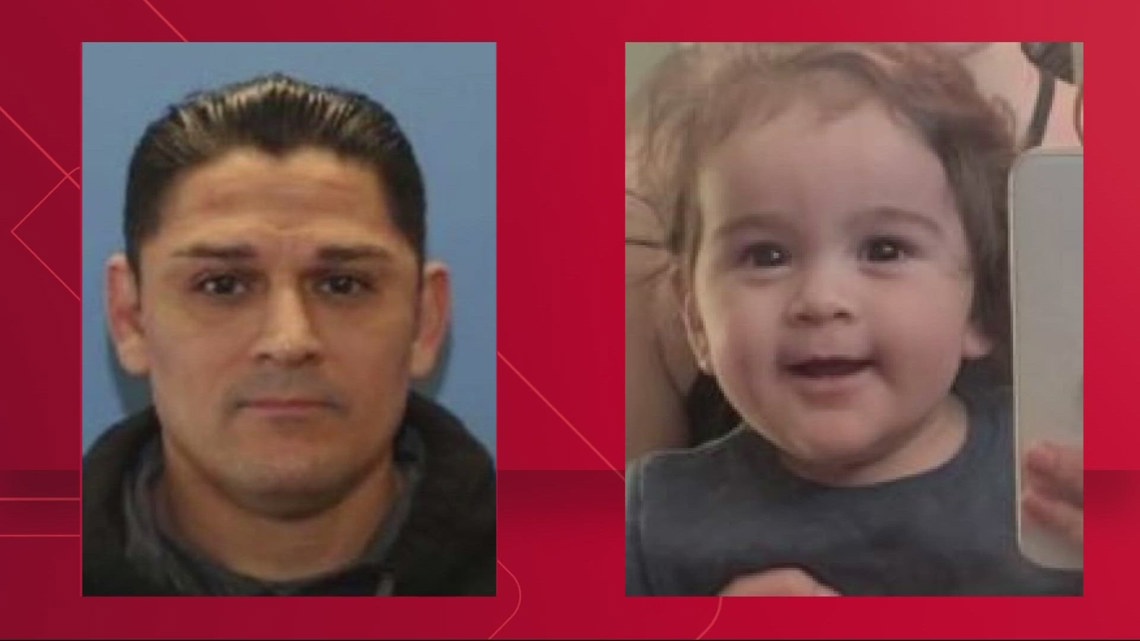
Elias Huizar may have been spotted at a Plaid Pantry on Hayden Island in North Portland just before 1 a.m. Tuesday. He was possibly driving a black sedan.
PORTLAND, Ore. — Officers are searching for a man accused of murdering two people and kidnapping a 1-year-old in eastern Washington. West Richland police received a tip that he was possibly sighted on Hayden Island in North Portland.
A clerk at a Plaid Pantry on Hayden Island told police that he may have seen the suspect, 39-year-old Elias Huizar, at the store just before 1 a.m. Tuesday. The West Richland Police Department (WRPD) said Portland police alerted them about the potential sighting, and that Huizar was possibly driving a black sedan. The clerk said Huizar bought a drink at the store around 12:42 a.m. and also reported seeing a child in the backseat of his vehicle, according to Portland police.
Police searched the area but did not find Huizar, the 1-year-old or the vehicle.
Around 8:45 a.m., deputies with the Multnomah County Sheriff's Office responded to the area of Exit 30 off Interstate 84, near Benson State Park. A person reported seeing a vehicle that possibly matched information in the Amber Alert out of Washington. Law enforcement responded to the area, but did not find the vehicle.
WRPD initially said they were looking for a silver 2009 Toyota Corolla with Washington license plates CBZ4745.
Huizar is suspected of shooting and killing his ex-wife on Monday outside an elementary school in West Richland, about three-and-a-half hours outside Portland in the Tri-Cities area. The shooting happened just before 3:30 p.m. outside William Wiley Elementary, according to WRPD.
Police then served a search warrant at Huizar's home and found the body of a second victim, WRPD said. The woman has not been publicly identified, but she was believed to be Huizar's girlfriend.
Huizar is believed to have kidnapped the 1-year-old, Roman Huizar, and could be heading to Mexico. An Amber Alert was issued on Monday night.
WRPD is scheduled to hold a 2 p.m. news conference. KGW will steam it live in the video player above, on KGW.com and on YouTube.
Huizar was due in court on Monday for allegedly raping a teen girl in February. According to court documents, police learned that Huizar's underage girlfriend reportedly caught him sexually assaulting her 16-year-old friend at his home on Feb. 3, KNDU reported.
He is described as 5-foot-6 with brown hair. He was wearing a black hat, a black long-sleeve shirt with light blue jeans and black shoes.
Huizar, who is a former Yakima cop, is considered armed and dangerous. Anyone with information is asked to call 911.
This is a developing story and it will be updated when more information becomes available.